SCOTUS Authorizes Executive Branch to Halt $4 Billion in International Grants
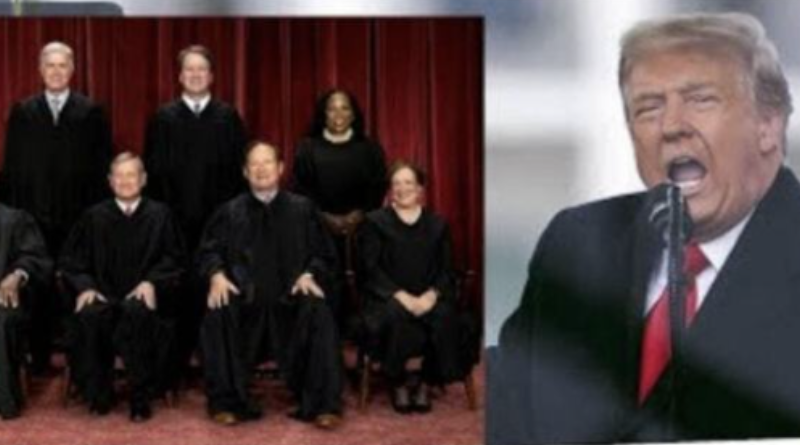
In a significant 6-3 ruling, the United States Supreme Court has sided with the administration, allowing the government to maintain a freeze on more than $4 billion in overseas assistance. The funds were originally targeted for cancellation by President Trump through a rarely utilized “pocket rescission” last month.
The high court’s decision effectively stays a lower court’s mandate that had previously ordered the immediate release of the taxpayer-approved money.
Breakdown of the Disputed Appropriations
The financial freeze impacts several key sectors managed by the State Department and the U.S. Agency for International Development (USAID):
-
$3.2 Billion: Allocated to various USAID programs.
-
$521 Million: Contributions from the State Department to global organizations.
-
$322 Million: Funding for the joint USAID–State Department Democracy Fund.
President Trump notified House Speaker Mike Johnson (R-La.) of the move, utilizing a “pocket rescission.” Because this request was submitted so close to the September 30 fiscal year deadline, the cancellation is designed to take effect automatically, bypassing the need for congressional intervention. This maneuver marks the first time a president has employed such a tactic in nearly five decades.
Judicial Perspectives and Legal Challenges
The majority opinion noted that the potential “harms to the Executive’s conduct of foreign affairs” outweighed the grievances of the respondents. These opposing groups—including the Global Health Council, Center for Victims of Torture, and the AIDS Vaccine Advocacy Coalition—argued that the freeze violates federal law and endangers global lifesaving efforts.
“This is a massive victory in restoring the President’s authority to implement his policies,” stated a White House Office of Management and Budget spokesperson, adding that the ruling prevents “left-wing groups” from controlling the executive agenda.
However, the Supreme Court has not yet ruled on the ultimate question: whether a president possesses the unilateral authority to “impound” money already sanctioned by Congress.
Dissent and the FTC Power Struggle
Justices Elena Kagan, Sonia Sotomayor, and Ketanji Brown Jackson dissented from the majority. This aligns with their opposition in a separate, concurrent dispute regarding the Federal Trade Commission (FTC).
The Court recently agreed to hear a case in December to determine if the President can fire FTC commissioners without cause. While that case is pending, the justices ruled that Trump may remove Commissioner Rebecca Kelly Slaughter.
Writing for the dissent, Justice Kagan argued that this gives the executive “full control” over independent bodies. She noted that while Congress intended to shield these agencies from political pressure, the majority’s stance allows the president to remove members for any reason, potentially erasing the bipartisan nature of federal agencies.