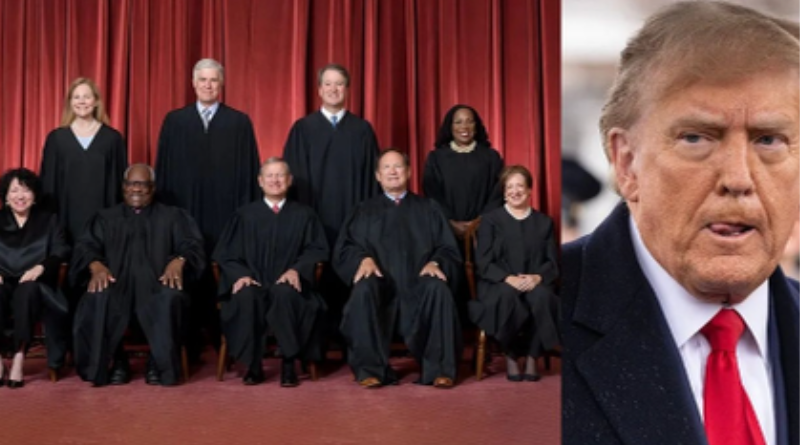
The Supreme Court of the United States made national headlines last week after issuing an emergency order allowing New York’s current congressional map to remain in place while legal challenges continue. The decision temporarily blocks a lower court ruling that had determined the map violated the Constitution by diluting the voting power of Black and Latino residents.
The unsigned order did not include a vote breakdown or written explanation, which is typical for decisions released through the court’s emergency docket. By keeping the existing district boundaries in place during the appeals process, the ruling makes it likely the current map will be used in the upcoming midterm elections.
The emergency request was filed by Nicole Malliotakis, a Republican representative whose district includes Staten Island and parts of southern Brooklyn. The dispute focuses on New York’s 11th Congressional District, which is currently the only district in New York City represented by a Republican.
The case also arrives as the Supreme Court prepares to issue a decision in Louisiana v. Callais, a redistricting dispute that could significantly affect how federal voting rights law is applied. The case centers on Section 2 of the Voting Rights Act of 1965, which allows individuals and organizations to challenge election laws or district maps they argue weaken the voting power of minority communities.
During arguments, several justices examined whether using race to create majority-minority districts conflicts with the Equal Protection Clause of the Fourteenth Amendment.
Legal analysts say the ruling could have nationwide implications. States where one political party controls both the legislature and the governor’s office may attempt new redistricting efforts. Analysts have pointed to Georgia, South Carolina, Tennessee, Missouri, and Florida as states where congressional maps could potentially be redrawn ahead of the 2026 midterm elections.