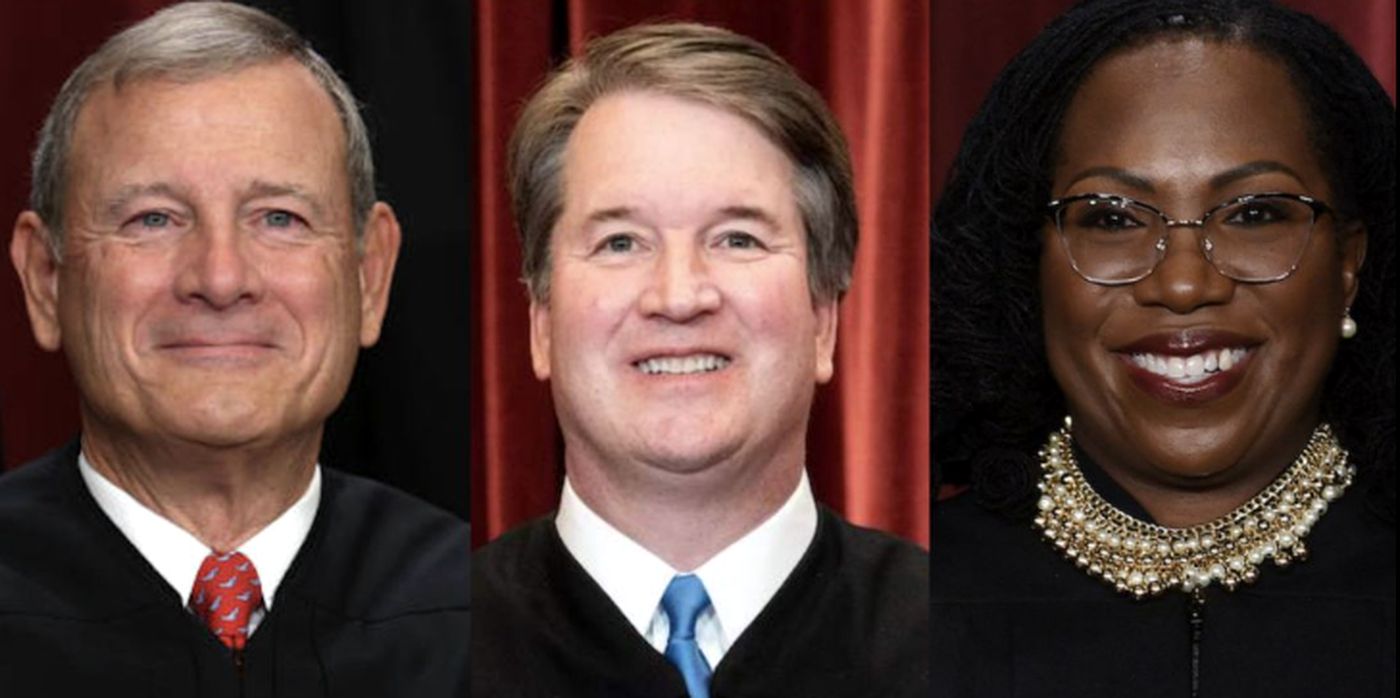
The U.S. Supreme Court heard arguments this week in a high-profile challenge to a Hawaii gun law that critics have dubbed the state’s “vampire rule,” reflecting its requirement that licensed handgun carriers obtain express permission before entering private property open to the public
Supreme Court heard arguments this week in a high profile challenge to a Hawaii gun
The U.S. Supreme Court heard arguments this week in a high-profile challenge to a Hawaii gun law that critics have dubbed the state’s “vampire rule,” reflecting its requirement that licensed handgun carriers obtain express permission before entering private property open to the public.
The case, Wolford v. Lopez, centers on a 2023 Hawaiian statute that makes it a misdemeanor for concealed-carry permit holders to bring firearms into retail stores, hotels, restaurants, and other publicly accessible private property unless the property owner grants explicit verbal or written consent or posts clear signage permitting firearms.
Three Maui residents and the Hawaii Firearms Coalition sued soon after the law’s passage, arguing it violates the Second Amendment by significantly limiting where law-abiding gun owners can carry their weapons for self-defense. A federal judge initially blocked enforcement of parts of the law, but the 9th U.S. Circuit Court of Appeals largely upheld it, prompting the Supreme Court review.
In defending the statute, Hawaii officials assert the measure reflects a balance between public safety, property owners’ rights and constitutional rights, and is consistent with long-standing legal traditions governing property and firearms. Opponents, with support from the U.S. Department of Justice under the Trump administration, contend the law effectively nullifies the right to carry in most everyday public-private settings by imposing onerous consent requirements.
The high court limited its review to the so-called “default rule” about carrying on private property open to the public and will not address other elements of Hawaii’s broader firearms code, such as provisions governing “sensitive places” like bars or beaches.
The ruling is expected by the end of the Court’s term in June and could have national implications for similar laws in California, New York, Maryland, and New Jersey that also hinge on property owners’ consent to armed entry.
The Court has been busy this year
The Court has been busy this year.
The Supreme Court turned down two important cases recently involving the Second Amendment.
The justices turned down an appeal that questioned Delaware’s ban on assault-style rifles and large-capacity magazines, as well as turned away a case about Maryland’s handgun licensing requirements.
In this way, the Court avoided dealing with two important cases involving gun rights. A group of gun owners and gun rights groups tried to appeal to the justices, but they turned them down. They wanted to stop Delaware’s ban on “assault weapons” and magazines that can hold more than 17 rounds. The ruling was after a lower court decided not to issue a preliminary injunction.
These kinds of guns have been used in several mass shootings in the U.S., but FBI crime statistics indicate that handguns are used in the vast majority of gun-related murders.
The gun rights group Maryland Shall Issue and other plaintiffs also appealed, but the justices did not hear it. They were contesting a lower court’s ruling that the state’s licensing law aligned with the Second Amendment’s right to keep and bear weapons.
The justices chose not to hear these two cases, but they also left unaddressed two
The justices chose not to hear these two cases, but they also left unaddressed two other appeals against Maryland’s ban on assault weapons and one in Rhode Island against the state’s ban on large-capacity magazines.
With a 6-3 conservative majority, the Supreme Court has always taken an “originalist” view of gun rights in major decisions going back to 2008.
The AR-15 and AK-47 are two examples of semiautomatic “assault” rifles that are illegal in Delaware because of gun safety laws that were passed in 2022. However, people who owned these weapons before the laws were passed can keep them as long as they meet certain requirements. The law also prohibits large-capacity magazines, rendering devices owned prior to its enactment ineffective.
People from the state who want to buy illegal guns or magazines, a gun dealer, the Firearms Policy Coalition, and the Second Amendment Foundation are challenging the law.
They said the lower courts were mistaken when they said that “deprivation of Second Amendment rights necessarily constitutes an irreparable injury.”