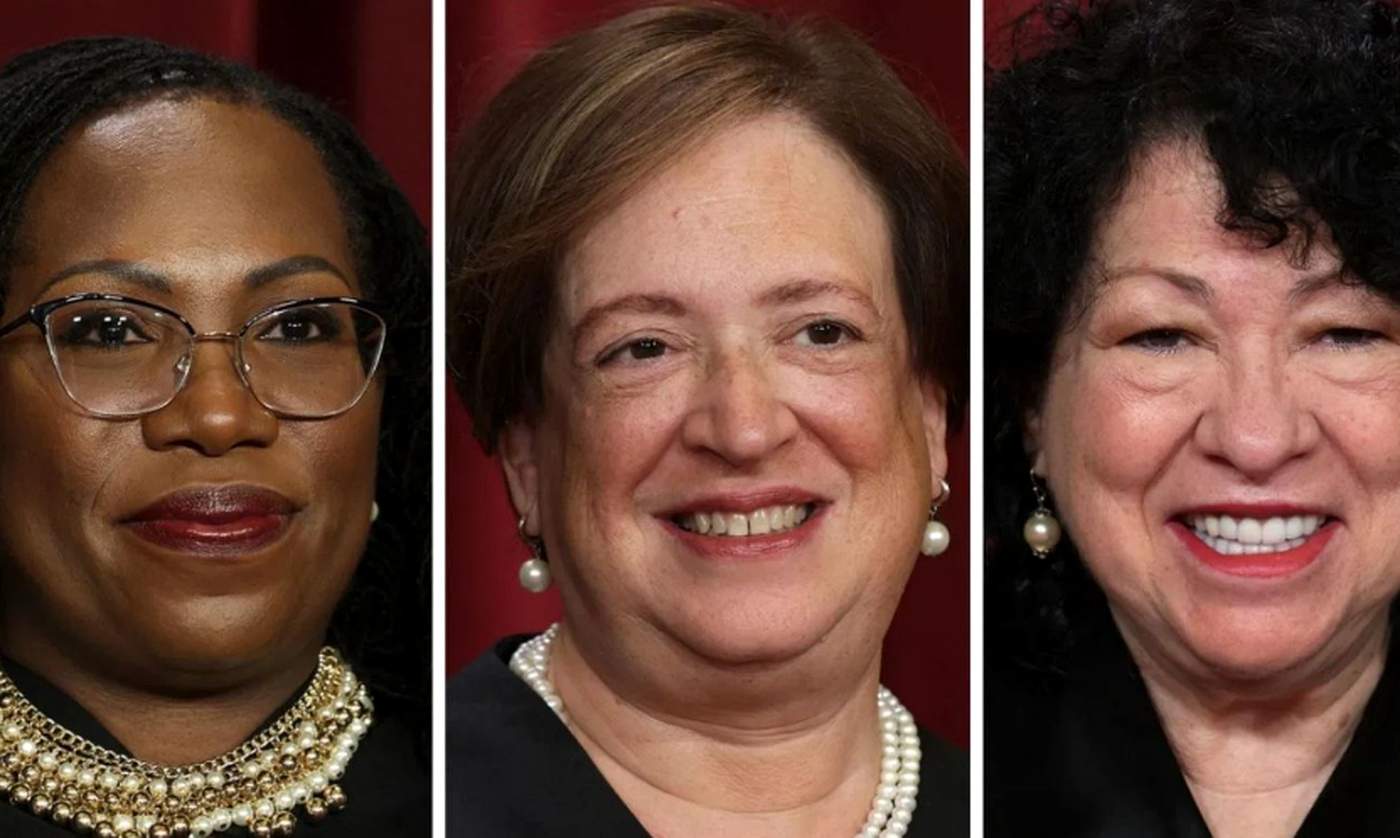
Justice Sonia Sotomayor addressed an audience at the University of Kansas School of Law this week and made a personal critique of Justice Brett Kavanaugh. Her criticism did not focus on his legal reasoning in a pending immigration case but rather on his family background and, by implication, questioned his ability to fairly judge the lives of working people
Justice Sonia Sotomayor addressed an audience at the University of Kansas School of Law this
Justice Sonia Sotomayor addressed an audience at the University of Kansas School of Law this week and made a personal critique of Justice Brett Kavanaugh. Her criticism did not focus on his legal reasoning in a pending immigration case but rather on his family background and, by implication, questioned his ability to fairly judge the lives of working people.
During her public appearance, Sotomayor referred to Kavanaugh’s concurring opinion in the case Noem v. Vasquez Perdomo, which concerns ICE’s authority to briefly detain individuals during immigration raids. Rather than simply disagreeing with his legal analysis, she made her comments personal.
“I had a colleague in that case who wrote, you know, these are only temporary stops. This is from a man whose parents were professionals. And probably doesn’t really know any person who works by the hour,” she told the law school audience.
“Those hours that they took you away, nobody’s paying that person. And that makes a difference between a meal for him and his kids that night and maybe just cold supper,” she added.
“Life experiences teach you to think more broadly and to see things others may not. And when I have a moment where I can express that on behalf of people who have no other voice, then I’m being given a very rare privilege.”
The case of Noem v
The case of Noem v. Vasquez Perdomo is currently before the Supreme Court. It focuses on whether ICE agents are permitted to briefly detain individuals they encounter during immigration enforcement operations. Kavanaugh wrote a concurring opinion on the case.
In a column, Fox News legal expert and Georgetown University law professor Jonathan Turley noted the rarity of a sitting justice criticizing a colleague on a personal level in public, adding that Sotomayor’s educational background was far from blue-collar.
“I have long criticized the growing number of public statements by justices on controversial subjects and cases, including Sotomayor. However, this appearance represented a new low in lashing out at a colleague as effectively blinded by his own privilege,” Turley wrote, adding:
It was reminiscent of Sotomayor’s reference to being a “wise Latina” on the bench. While on the Second Circuit, then-Judge Sotomayor explained that her life experiences offered a “difference” not shared by other colleagues. In a 2001 lecture at Berkeley law school titled “A Latina Judge’s Voice,” she heralded the difference that “our gender and national origins may and will make… in our judging.”
In her latest comments, she is suggesting that her interaction with hourly wage earners allows her to see things that Kavanaugh does not in these cases. The claim that she “sees things that others may not” suggests that the privileged, insulated existence of Kavanaugh blinds him to the true merits of cases before him.
Turley noted that Sotomayor went on to admit that she has a friendship with most
Turley noted that Sotomayor went on to admit that she has a friendship with most, but apparently not all, of her high court colleagues. “I dare say that with virtually all of them, I certainly have a civil relationship. And with many of them, I think I dare say that I have a friendship,” she reportedly said.
“After this speech, I would not expect a social media friend invite from Kavanaugh,” Turley wrote, going on to explain that Sotomayor was being hypocritical, which is a common trait on the left. “It is true that Kavanaugh went to elite schools. But so did Sotomayor, who graduated from Princeton and Yale Law.”
“Both of Kavanaugh’s parents were indeed lawyers, but it is odd that Sotomayor would miss the compelling story of his mother, Martha. She was a history professor who went to law school while raising a family and eventually became one of the minority of women on the state bench. That would also seem to be ‘gender origins’ that Sotomayor previously cited as key in her view of impactful judging,” he added.
He went on to describe Sotomayor’s characterizations of Kavanaugh “petty and unfair.”