President Donald Trump scored another significant legal victory in his push to tighten mail-voting procedures ahead of the November midterms.
A federal judge lifted a nationwide injunction this week that had prevented the administration from implementing key portions of his executive order.
U.S. District Judge Indira Talwani in Boston dissolved the injunction following the Supreme Court’s 6-3 decision Monday, concluding that an earlier challenge brought by Democratic-led states was premature.
However, the justices did not decide whether Trump’s executive order itself is ultimately lawful.
Talwani, an Obama appointee who previously raised serious constitutional concerns about the administration’s plan, said she was “compelled” by the Supreme Court’s decision to remove the remaining obstacle, even as she warned that the policy could produce “chaos” and described the executive order as “likely unconstitutional.”
The decision clears the way, at least temporarily, for the U.S. Postal Service to move forward with a recently finalized rule implementing Trump’s directive, which establishes new federal requirements for states using the Postal Service to distribute and process mail ballots.
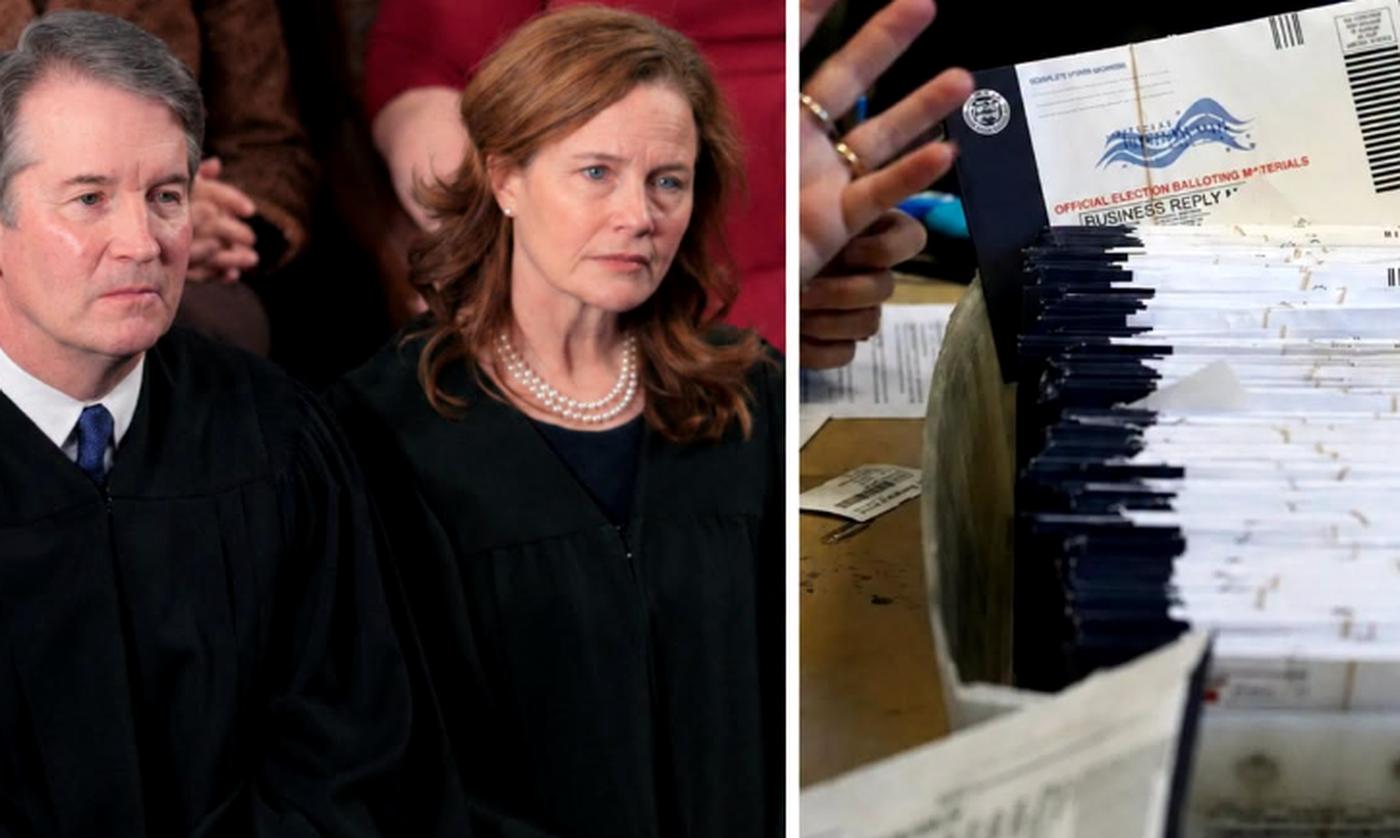
Under the rule, states would be required to provide the Postal Service with lists identifying voters who are eligible to receive mail ballots, while election officials would also have to comply with new requirements governing ballot envelopes, including standardized or barcoded designs.
The administration maintains that the changes are reasonable safeguards designed to improve election administration and has characterized the requirements as modest, while opponents contend that the federal government is intruding into election procedures traditionally administered by the states.
Trump has repeatedly called for tougher safeguards surrounding mail voting and has argued that the system is vulnerable to abuse, making election integrity a central component of his broader push to overhaul federal election procedures since returning to the White House.
The courtroom victory did not end the fight, however, as Democratic officials from 24 states and the District of Columbia immediately launched a new lawsuit challenging the finalized Postal Service rule, meaning the dispute could race back through the courts with the midterms rapidly approaching.
The states argue that the administration exceeded its constitutional and statutory authority by effectively allowing the Postal Service to regulate which mail ballots it will handle and by imposing new election-administration requirements without congressional authorization.
New York Attorney General Letitia James, one of the Democratic attorneys general involved in the challenge, blasted the administration’s move and argued that the new requirements threaten voters as states prepare for November.
“Across the country, states are already deep into preparations for the 2026 elections. Now, at the last moment, the federal government is attempting to meddle in those preparations and potentially threaten countless Americans’ right to vote,” James said in a statement.
“USPS has no authority to decide who can and cannot vote by mail,” James added.
Election officials challenging the policy argue that the timing is particularly problematic because the first wave of mail ballots is scheduled to be sent beginning next week, leaving states with little time to change envelopes, procedures, equipment, training, and instructions to comply with the federal requirements.
The administration’s latest victory follows Monday’s Supreme Court decision, in which the conservative majority lifted a separate injunction that Talwani had issued after concluding that the states challenging Trump’s order had gone to court before the administration had taken sufficiently concrete action to implement it.
That distinction is critical because the Supreme Court did not endorse the legality of Trump’s policy on the merits, leaving opponents free to return to court now that the Postal Service has finalized the rule and created the concrete government action that was previously missing.
The legal showdown could ultimately return to the Supreme Court before Election Day, only this time the justices could be asked to confront the substantive constitutional questions they avoided when issuing Monday’s procedural ruling.
The stakes could hardly be higher politically, with Republicans and Democrats battling for control of Congress and election officials already deep into preparations for a midterm contest in which millions of Americans are expected to cast ballots through the mail.