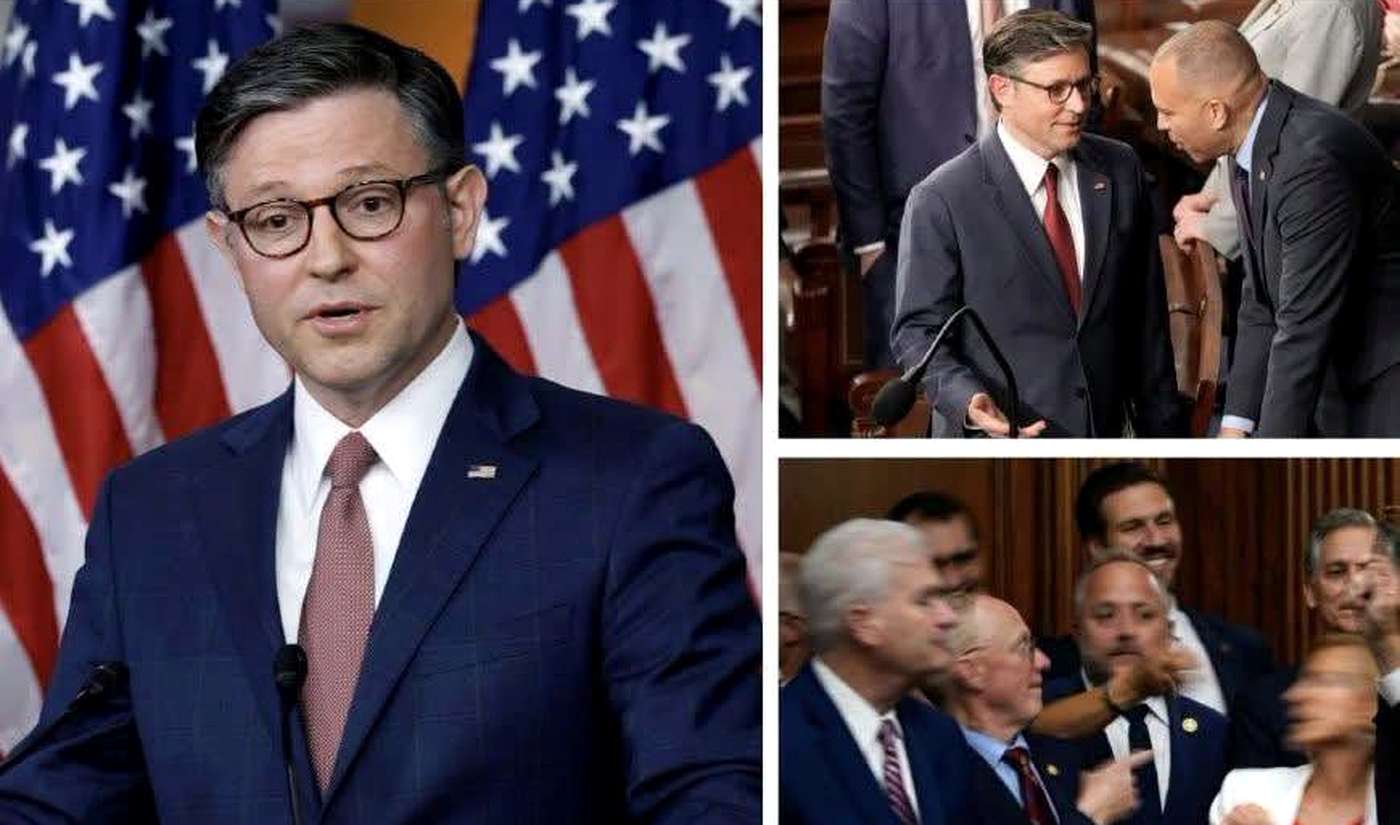
House Dems Reject Balanced Budget Amendment Proposal
The U.S. House of Representatives on Wednesday rejected legislation aimed at requiring the federal government to maintain a balanced budget, dealing a setback to a long-standing goal of fiscal conservatives.
The measure required a two-thirds majority in both chambers of Congress before being sent to the states for ratification.
Nearly every Democrat opposed the proposal, with only one voting in favor.
The amendment effort faced significant challenges from the start, given the high threshold required for passage
Despite the outcome, the vote was significant for budget hawks, including the bill’s sponsor, Rep. Andy Biggs, R-Ariz. He said the effort reflects years of advocacy among conservatives pushing for stricter fiscal controls.
“Many of us have been agitating for years to do a balanced budget amendment, and out of the blue, they said, ‘we’re ready to do it,’” Biggs said in an interview.
Just out of the blue, I got a call,” Biggs added
Balanced budget amendments have been introduced more than 100 times since 1999, according to legislative data analyzed by the Pew Research Center.
The concept saw its peak in the 1970s and 1980s and remains one of the most frequently proposed constitutional changes.
Biggs’ proposal would have required that federal spending in a given year not exceed the average annual revenue collected over the previous three years, adjusted for inflation and population growth
The resolution included an exception for times of declared war, allowing Congress to approve spending beyond the cap.
Modern military conflicts, including those following World War II, have typically been funded through deficit spending without formal declarations of war.
That reality has complicated past efforts to impose strict balanced budget requirements
The proposal also sought to impose a two-thirds vote requirement in both the House and Senate for any new taxes or tax increases.
Current law allows tax legislation to pass with a simple majority under certain procedures, including budget reconciliation.
While the measure fell short, it underscores continued divisions in Congress over fiscal policy and the role of deficit spending in federal governance
Supporters argue that a balanced budget requirement would impose discipline on federal spending, while opponents warn it could limit the government’s ability to respond to economic downturns or emergencies.
The House passed legislation Wednesday aimed at cracking down on illegal immigrants accused of committing welfare fraud, approving the measure over strong opposition from most Democrats.
The bill was introduced by Rep
The bill was introduced by Rep. David Taylor, R-Ohio.
The legislation would amend the Immigration and Nationality Act to explicitly classify fraud involving public benefits as a deportable offense.
Republicans said the measure is designed to ensure that noncitizens who defraud taxpayer-funded programs are removed from the country and barred from returning.
Tom McClintock, R Calif., said during debate on the House floor
Tom McClintock, R-Calif. , said during debate on the House floor.
Democrats largely opposed the bill, arguing that existing law already allows for the deportation of noncitizens convicted of fraud. They characterized the legislation as unnecessary and duplicative.
Republicans pushed back on that claim, saying the bill does not prevent criminal prosecution before removal and maintains existing legal processes.
GOP lawmakers argued that the measure strengthens enforcement by closing perceived loopholes
The U. S. House is also trying to pass the Save America Act again this week.