All eyes are on the midterm elections on November 3rd.
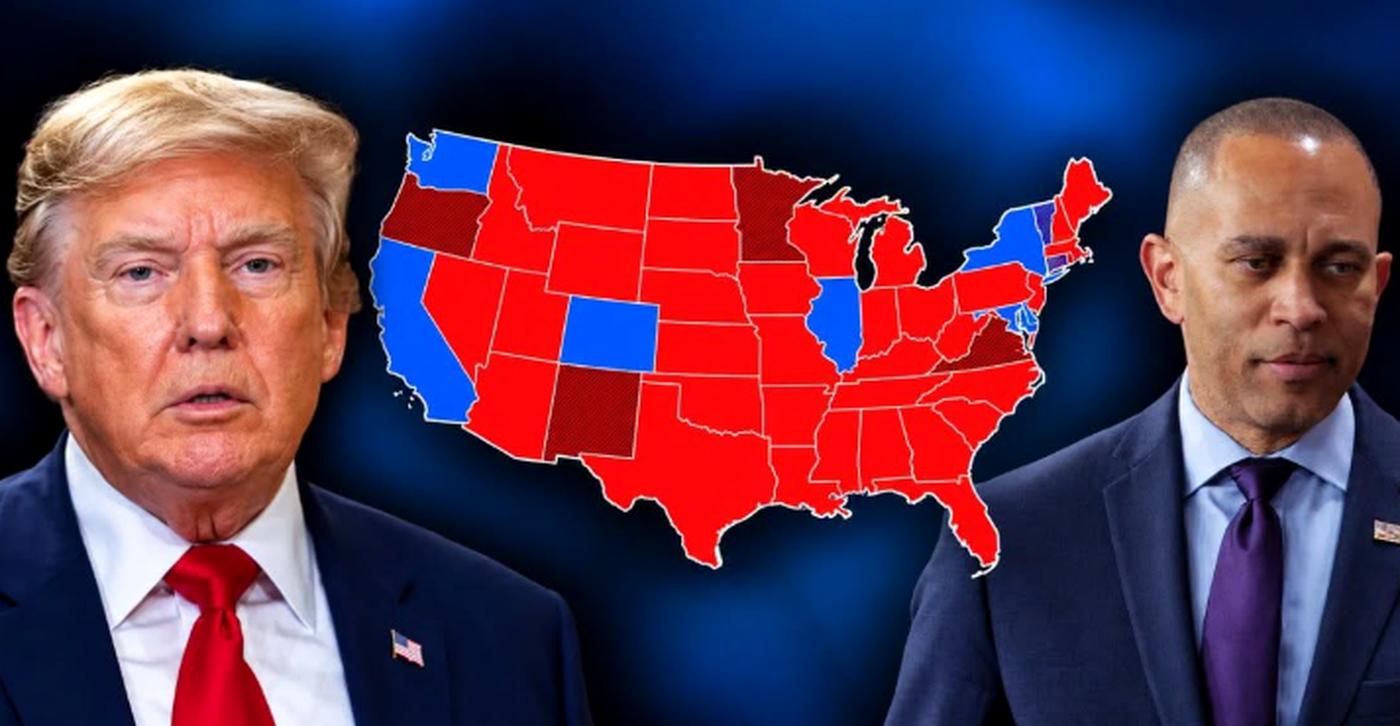
In a striking new projection that should rattle Democratic ranks, a detailed analysis of the 2026 midterms shows Republicans maintaining control of the U.S. Senate.
A YouTube video presents a closely watched 2026 Senate map prediction as Americans approach the November third midterm elections.
The video is titled “My FINAL 2026 Senate Map Prediction, One Week Till The Midterms.”
Republicans control 53 seats, while Democrats and two allied independents account for the remaining 47.
Thirty-five Senate seats are being contested, including special elections in Florida and Ohio.
Democrats need a net gain of four seats to take control because Vice President JD Vance breaks ties.
That math gives Republicans a meaningful advantage despite increasingly competitive races across the country.
Democratic control could instead create new obstacles for presidential appointments and legislative priorities.
The Cook Political Report identifies Alaska, Iowa, Kansas, Maine, Michigan, Ohio, and Texas as tossups.
Texas has emerged as an unexpected battleground despite its long record of electing Republicans statewide.
Republican Attorney General Ken Paxton faces Democratic state Representative James Talarico for the seat held by John Cornyn.
Trump won Texas comfortably in 2024, offering Republicans a historical foundation even as current surveys suggest a close contest.
The state has not elected a Democratic senator since 1988.
Ohio presents another closely watched contest between Republican Senator Jon Husted and former Democratic Senator Sherrod Brown.
Brown brings statewide experience, but Republicans hope Ohio’s recent presidential voting patterns favor their candidate.
In Maine, Republican Senator Susan Collins faces Democrat Troy Jackson in a race watched closely by national strategists.
Collins has shown crossover appeal, but changing political conditions make another victory uncertain.
Alaska Republican Senator Dan Sullivan is defending his seat against former Democratic Representative Mary Peltola.
Michigan features Republican Mike Rogers against Democrat Abdul El Sayed in a competitive open-seat contest.
In Iowa, Republican Ashley Hinson is competing in another race attracting attention from national forecasters.
Kansas Republican Senator Roger Marshall is also confronting a closer contest than Republicans traditionally expect in that state.
South Carolina, Nebraska, and Mississippi have drawn additional Republican spending as party leaders defend important seats.
North Carolina and Georgia remain significant Democratic defensive priorities in the broader Senate landscape.
Democratic Senator Jon Ossoff seeks another term in Georgia, a state with closely divided recent election results.
Republicans need not win every competitive contest to maintain control of the chamber.
They can absorb some losses if their candidates protect enough seats or capture Democratic-held territory.
Forecasting organizations disagree about which outcome is most likely.
Decision Desk HQ’s October twenty-eighth forecast assigned Democrats a 58% chance of Senate control.
Its model projected a 51-to-49 Democratic majority as its central forecast.
WATCH:
Another forecast from Le Millénaire placed Republicans at a 67% chance of retaining control.
President Donald Trump has also participated in campaign efforts intended to strengthen Republican candidates.
His political influence remains significant among conservative voters who want Congress aligned with the White House.
National Republican organizations also possess extensive financial resources for advertising, voter outreach, and campaign operations.
Trump’s flagship super PAC, MAGA Inc., began September with nearly $416 million available, according to federal disclosures.
The organization reported spending nearly $277 million from early September through mid-October supporting Republican candidates.
That figure includes transfers to allied committees, not simply advertising purchased directly by MAGA Inc.
MAGA Inc. transferred $200 million to No Going Back PAC and $25 million to Safety and Affordability PAC.
Federal filings showed MAGA Inc. still holding more than $164 million on October 14.
Its September and October balances describe different dates and must not be combined as simultaneous cash reserves.
Trump announced plans for his broader political operation to spend more than $400 million before Election Day.
His stated commitment encompasses advertising, rallies, voter contact, and other election activities across multiple states.
Reuters reported Trump-aligned committees spent more than $36 million supporting Paxton in Texas.
Those groups also devoted approximately $30.1 million to Mike Rogers in Michigan and over $28 million to Jon Husted.
Prominent MAGA Inc. contributors include Stephen Wynn, Stephen Schwarzman, and Diane Hendricks.
Reuters reported Wynn gave $8 million in September, while Schwarzman and Hendricks contributed $5 million each.
The National Republican Congressional Committee reported raising $50 million during the third quarter of 2026.
The committee entered October with approximately $61 million available and reported $250 million raised during this cycle.
The Democratic Congressional Campaign Committee had raised approximately $249 million and held $55.7 million entering October.
Those House committee balances are separate from resources directly supporting Paxton’s Senate campaign.
A Reuters review found three major Republican party committees collectively held approximately $187 million at September’s end.
Their Democratic counterparts held roughly $100 million, providing Republicans a substantial combined cash advantage.
Republican committees spent approximately $137 million on coordinated congressional activities between July and September.
Democratic committees spent approximately $55 million on comparable efforts during that reporting period.