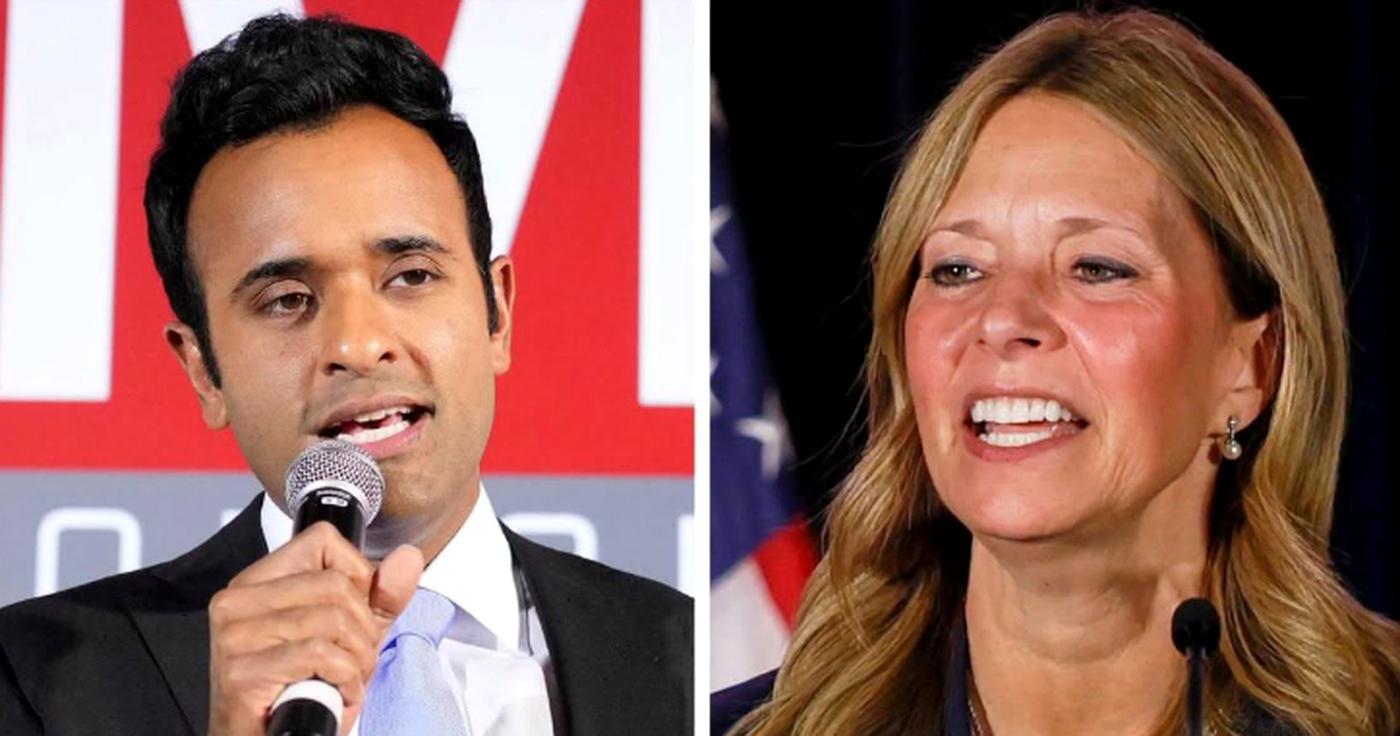
Ohio Democrat Amy Acton’s estranged mother is urging voters to reject her daughter in the governor’s race against Vivek Ramaswamy.
Donna Arthur appears in a campaign advertisement accusing Acton of lying about her childhood and questioning her fitness for office.
The attack puts a painful family history at the center of an already contentious contest for Ohio’s highest office.
Acton, Ohio’s former health director, has described childhood poverty and abuse as experiences that shaped her commitment to public service.
Her mother disputes that account, including Acton’s description of living in a tent during her childhood.
Arthur calls her daughter a liar and argues that voters should not trust her to improve their lives.
Those accusations are her mother’s claims, and court records provide significant context missing from the advertisement.
Ramaswamy confirmed Tuesday night that his campaign produced the spot, taking ownership after questions surfaced about its origins.
“It is an ad from our campaign,” he said, according to the New York Post.
He said Arthur received no compensation for participating and that he had never met her.
Ramaswamy defended the advertisement by accusing Acton of avoiding debates and spreading falsehoods about him and his family.
Those were his explanations for deploying the family dispute, rather than independent findings about Acton’s conduct.
The Republican’s decision makes his campaign accountable for the advertisement’s accuracy, presentation and treatment of her family history.
Acton’s campaign condemned the attack, while her brother offered a forceful response defending his sister’s account.
Phil Stearns appeared alongside Acton in a response advertisement, describing abuse during their childhood and praising her protection of him.
“I received a lot of abuse, but Amy always got the worst of it,” Stearns said.
He also condemned Ramaswamy’s decision to use their estranged mother against his sister in the campaign.
The siblings’ response presented their estrangement as rooted in childhood trauma, rather than a recent political disagreement.
According to Ohio Capital Journal’s reporting, court records show Acton’s stepfather was charged with sexually abusing her at age 12.
The stepfather, Cledith Arthur, pleaded not guilty, posted bond and fled, the outlet reported after examining the records.
He remained a fugitive until his death in 2004, meaning the charges never resulted in a conviction.
That distinction matters because criminal allegations must be described accurately, even when the underlying history is politically explosive.
The same reporting said police found the stepfather living in a tent when Acton was a child.
That record gives substance to a central element of the childhood account her mother disputes.
It also raises an obvious question about whether voters received adequate context when they encountered the campaign’s advertisement.
Stearns said their mother remained married to the stepfather after his arrest and the children’s removal from her custody.
Acton has said she has had no contact with her mother since the courthouse proceedings involving her stepfather.
In her response, Acton accused Ramaswamy of exploiting that history for political gain.
The backlash also reached Republicans, complicating any assumption that the advertisement would generate a straightforward partisan response.
Ohio Development Director Lydia Mihalik, a member of Republican Governor Mike DeWine’s cabinet, condemned exploiting childhood trauma in politics.
Her criticism underscored that the dispute extends beyond the usual exchanges between rival campaigns and their supporters.
Candidates’ honesty is a legitimate subject for scrutiny, especially when personal biographies become part of their political appeal.
But an accusation from an estranged relative requires context, particularly when available records document serious abuse allegations, The New York Post reported.
Voters deserve transparency about who produced an advertisement, why it was made and what evidence supports its central claims.