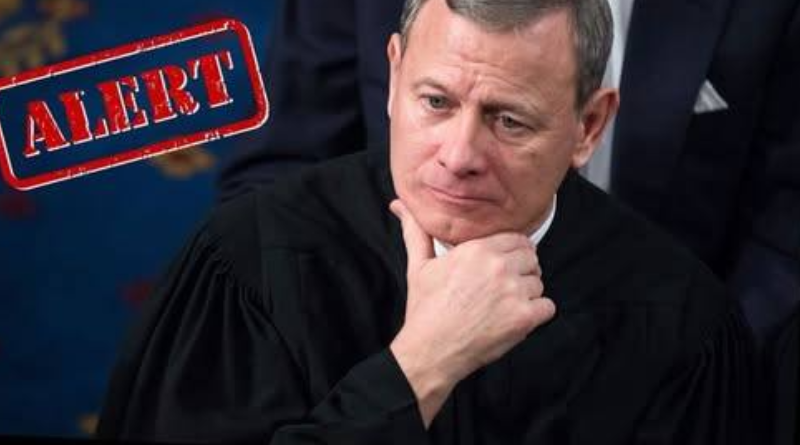
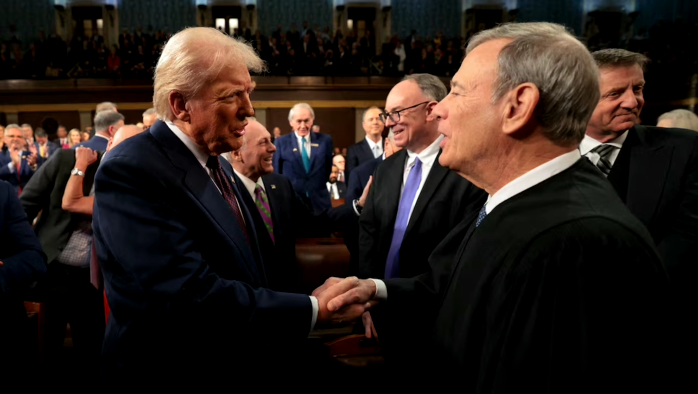
Chief Justice John Roberts has finally taken a basic step to protect the Supreme Court’s integrity, moving to lock down internal deliberations, private discussions, and draft opinions. According to The New York Times, clerks and permanent staff are now being required to sign non-disclosure agreements — a measure that would have been uncontroversial in any serious institution until very recently.
Predictably, the Times treats this development like the opening chapter of a thriller, written in a hushed, conspiratorial tone as if Roberts were orchestrating something sinister behind closed doors. But there’s nothing mysterious happening here at all. The real scandal isn’t secrecy — it’s how thoroughly the Court’s confidentiality was shredded in the first place.
The erosion of the Court’s integrity didn’t happen in a vacuum. It happened because elite media outlets like the New York Times and POLITICO eagerly published leaked material they knew was never meant to see the light of day:
The chief justice acted after a series of unusual leaks of internal court documents, most notably of the decision overturning the right to abortion, and news reports about ethical lapses by the justices. Trust in the institution was languishing at a historic low. Debate was intensifying over whether the black box institution should be more transparent.
Instead, the chief justice tightened the court’s hold on information. Its employees have long been expected to stay silent about what they witness behind the scenes. But starting that autumn, in a move that has not been previously reported, the chief justice converted what was once a norm into a formal contract, according to five people familiar with the shift.
The New York Times is straining to portray this as something nefarious, even offensive. In reality, it reflects a far darker truth: respect for the Supreme Court as an institution has already collapsed from within.
Enjoying our conservative news and commentary? Make sure you share and tell your friends about us!
A new generation of activist clerks and staff no longer see the Court as something to protect or preserve. They see it as a political battlefield — a place to exploit, not to serve. When insiders treat privileged access to the highest court in the land as an opportunity to advance personal or ideological agendas, appeals to tradition, honor, or ethical restraint become meaningless.
The aftermath of the Dobbs draft leak in 2022 and the widespread turmoil it ignited illustrate the extent of the damage caused by these events:
The justices are accustomed to controlling what the public knows about their work, sealing nearly everything but their oral arguments and written opinions behind a high wall of secrecy. Courts are excluded from the open records laws that require many other government bodies to maintain and make available internal information.
The justices claim their papers belong to them, not the government or the public, and generally arrange to have them locked away until long after their deaths. The court releases no visitor logs to reveal who meets with the justices.
But in 2022, in a shock to many at the court, someone leaked a draft of the court’s decision overturning the federal right to abortion to Politico, which published the document weeks before the justices had intended to make it public. The court conducted an investigation of its staff but mostly spared the justices, and the source was never publicly identified.
That’s the core failure at the center of all this: there was no public accountability for the leak. Whatever discipline may have occurred — if any occurred at all — happened quietly, behind closed doors, shielded from scrutiny. No explanation. No consequences the public could see. No signal that betrayal of the Court would carry a real cost.
So of course the leaks continued. When violations are met with silence, silence becomes permission.
Even more telling is where those leaks consistently land. They don’t scatter across the media ecosystem. They funnel to the New York Times — a publication with no apparent interest in preserving the Court’s integrity. If it cared about the institution, it wouldn’t launder anonymous leaks under the guise of “exclusives” and pretend it’s doing the country a favor:
More recently, The Times has been regularly publishing stories illuminating the court’s inner workings, including accounts of sensitive debates among the justices.
In September 2024, The Times published an article describing how the chief justice pushed to grant President Trump broad immunity from prosecution. The article quoted from confidential memos by the chief justice and other members of the court who applauded his reasoning. Weeks later, the chief justice abruptly introduced the nondisclosure agreements, after the term had begun.
And, predictably, the New York Times and its usual stable of “experts” don’t view Chief Justice Roberts’ move from an honor system to a legally binding safeguard as proactive or responsible. They frame it as evidence that the Court is somehow fragile — or worse, illegitimate.
And naturally, they find a way to blame Donald Trump:
Former clerks and academics, told by The Times about the Supreme Court’s new nondisclosure agreements, said they were a sign that the justices felt they could no longer rely on more informal pledges or longstanding norms to guard their internal workings from public view.
“They feel under the microscope and are unwilling to rely simply on trust,” said Jeffrey L. Fisher, co-director of the Supreme Court litigation clinic at Stanford Law School and a former clerk to Justice John Paul Stevens.
The switch to formal contracts is “a sign of the court’s own weakness” and the erosion of an internal compact, said Mark Fenster, a law professor at the University of Florida.
Court employees see the justices’ maneuverings, their compromises, tensions and reversals. They read the memos and draft opinions that tell the story of how the law is really shaped. That includes the secret negotiations behind so-called “shadow docket” decisions, emergency orders the court issues often with little or no public rationale. Since Mr. Trump took office, the court has repeatedly issued such emergency orders, allowing him to implement his agenda [my emphasis].
Much like what’s happening at the Pentagon, the Supreme Court is moving to batten down the hatches — say less publicly, tighten internal discipline, and make sure the actual work gets done without ideological interference.
Yet here’s the irony the Times can’t quite explain away. Despite breathlessly warning readers about how “secretive” the Court has supposedly become, the paper still manages to hint at insider knowledge and leaked details. Which tells you everything you need to know: the leakers haven’t stopped. Otherwise, the New York Times wouldn’t be able to strike its familiar tone — condemning confidentiality while simultaneously teasing the very secrets it claims are being unfairly hidden.
If this procedural change achieves its desired outcome, the SCOTUS journalists at the New York Times and other news organizations might face a fate similar to that of their sports and foreign correspondent colleagues at The Washington Post.