One of President Trump’s key issues in his 2024 campaign was strict enforcement of existing immigration laws and U.S. borders, as well as mass deportations of those in the country illegally.
And by any measure, his efforts have largely been successful—but he’s not done yet.
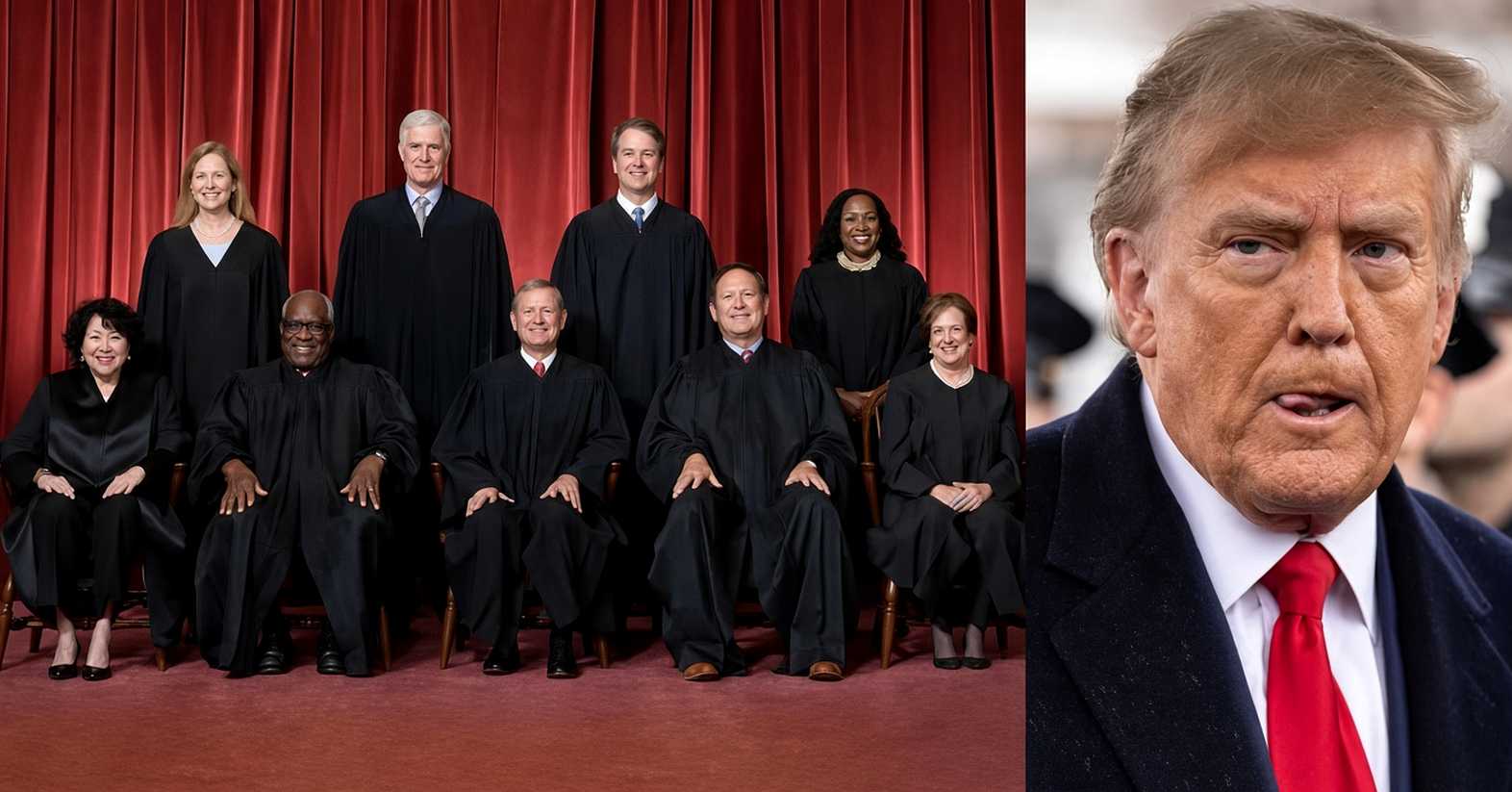
The Supreme Court has allowed a Trump administration agreement with Texas eliminating a Biden-era immigration rule to remain in effect, handing the administration a significant victory in its effort to prevent immigration judges from indefinitely pausing certain deportation cases.
The justices rejected an emergency request Tuesday from Baltimore, Columbus, New Haven, and immigrant legal-services organization Centro Legal de la Raza to temporarily restore the policy while their challenge proceeds through the lower courts.
The Supreme Court issued a one-sentence order without explaining its reasoning, and no justice publicly dissented from the decision.
At issue is a practice known as “administrative closure,” which allows immigration judges to temporarily remove deportation proceedings from their active dockets while immigrants pursue separate applications for visas, humanitarian protections or other forms of legal relief.
Administrative closure had existed in various forms for decades before the Biden administration formally codified the procedure in a 2024 Justice Department regulation governing immigration-court docket management.
The first Trump administration had taken the opposite position, concluding that immigration judges lacked general authority to indefinitely suspend removal proceedings unless specifically authorized by law or regulation.
After Trump returned to office, the Justice Department announced that it would no longer defend the Biden-era regulation, which led to an unusual legal maneuver involving Texas Attorney General Ken Paxton.
Texas sued the Justice Department on June 22, seeking to invalidate the 2024 rule, arguing that administrative closure allowed immigration cases to remain unresolved for years and effectively provided some migrants with what the state characterized as indefinite protection from removal.
Instead of defending the federal regulation, the Trump Justice Department agreed with Texas and joined the state in asking the court to enter a consent judgment eliminating the rule nationwide.
Chief U.S. District Judge Reed O’Connor, a George W. Bush appointee in the Northern District of Texas, approved the agreement the same day the lawsuit was filed, vacating the Biden-era regulation nationwide and restricting adoption of similar rules without congressional authorization.
The speed and structure of the case immediately drew objections from immigration advocates and several Democratic-led cities, which argued that Texas and the Justice Department were effectively working together despite formally occupying opposite sides of the lawsuit.
The challengers accused Texas and the administration of using what they called “collusive” litigation to eliminate a federal regulation without going through the normal administrative process for rescinding an agency rule.
Texas rejected that argument, maintaining that a legitimate legal dispute existed because the Biden-era regulation remained binding when the state filed its lawsuit and continued imposing what Texas described as fiscal and sovereign harms.
The Justice Department separately argued that the cities and immigrant advocacy organization lacked legal standing to intervene and had not demonstrated the immediate injury necessary to justify emergency relief from the Supreme Court.
O’Connor refused to let the cities intervene, and the Fifth U.S. Circuit Court of Appeals declined to freeze the agreement while the challengers appealed, sending the dispute to the Supreme Court on an emergency application.
The Supreme Court’s refusal to intervene leaves O’Connor’s nationwide order in place while the underlying appeal continues at the Fifth Circuit.
The practical effect is significant because immigration judges remain unable to use the Biden administration’s administrative-closure rule to put certain deportation proceedings on hold while immigrants await decisions elsewhere in the federal immigration system.
Those cases can involve immigrants pursuing family-based petitions or U visas available to certain crime victims who cooperate with law enforcement, among other forms of potential relief.
Supporters of administrative closure argue that the procedure allows immigration courts to manage overloaded dockets efficiently while avoiding unnecessary deportation proceedings against people who may ultimately qualify to remain legally in the United States.