The Pentagon is moving ahead with an ambitious homeland-defense initiative aimed at ensuring major U.S. military installations can continue operating for at least 90 days without outside support if war, cyberattacks, or sabotage disrupt the civilian infrastructure surrounding them.
Known as FORTRESS America, the initiative would require major military installations in the continental United States to independently sustain essential operations for at least three months, including electricity, water, fuel, and communications.
The strategy represents a significant change in Pentagon planning by preparing American bases not only to support military operations overseas but also to withstand potentially severe disruptions inside the United States.
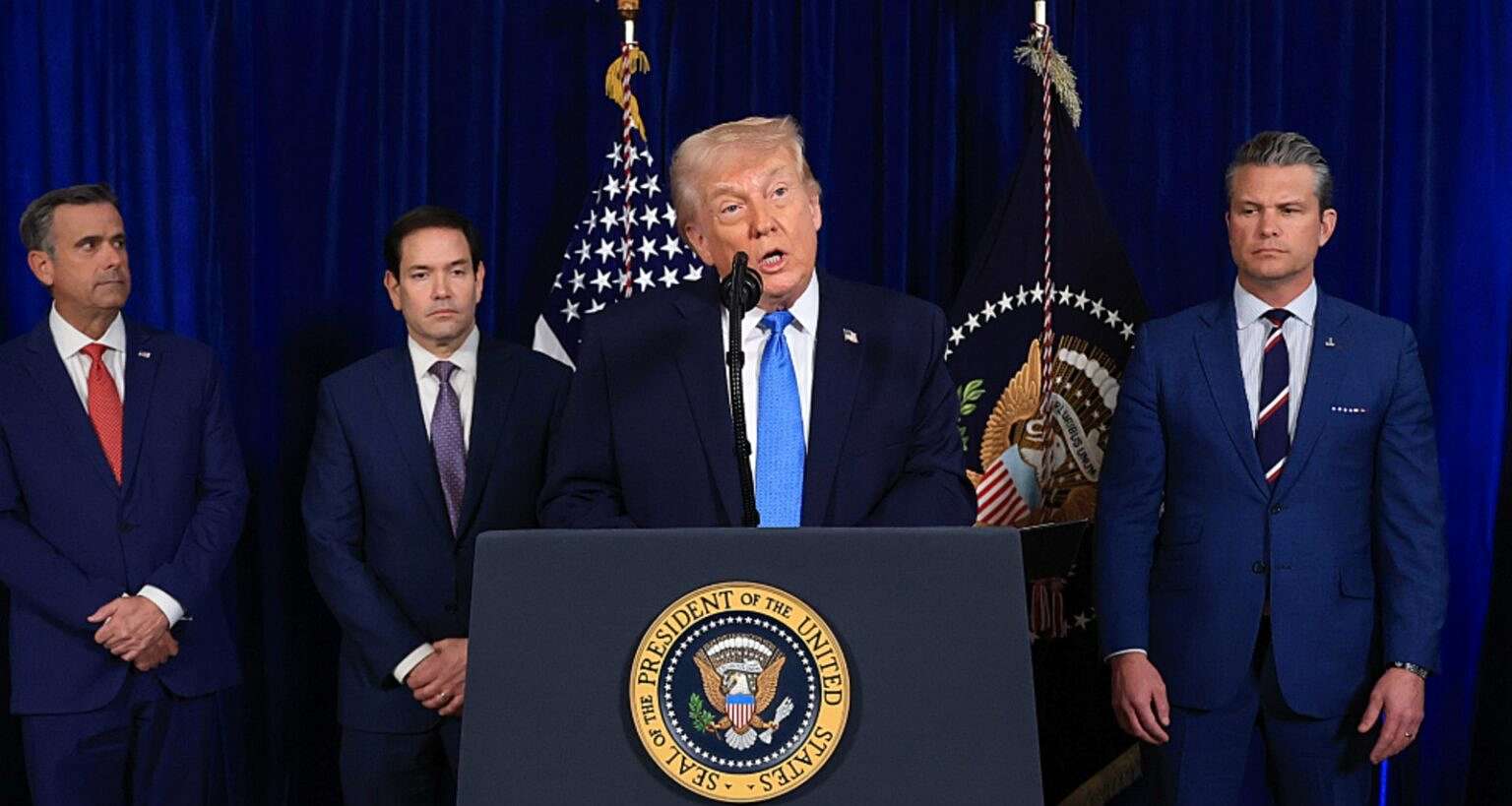
FORTRESS stands for Federal Operations for Resilience, Troop Resources, Energy, Supply and Survivability, and Defense Secretary Pete Hegseth formally unveiled the initiative during his Sept. 30 “State of the Force” address at Marine Corps Base Quantico.
Pentagon chief spokesman Sean Parnell said the military’s reliance on conventional civilian infrastructure creates a potentially dangerous vulnerability because an adversary could target electrical grids, communications networks and other critical systems during a major conflict.
“We don’t want to rely on standard civilian municipal infrastructure to run our national defense,” Parnell told Fox News Digital, describing that dependence as an “intolerable risk.”
Electricity is among the Pentagon’s biggest concerns because virtually every modern military capability depends on reliable power, including command centers, communications, logistics operations and weapons production.
Under FORTRESS America, major installations would eventually be capable of generating their own electricity rather than relying entirely on the civilian power grid.
Defense officials are examining technologies including portable nuclear reactors, large-scale battery storage and microgrids that could disconnect military installations from surrounding civilian electrical systems during prolonged outages.
“Mission-critical power must be independent, hardened, and redundant,” Parnell said.
The initiative extends beyond electricity, with planners preparing for disruptions involving fuel, water, communications, medical supplies, weapons production and the domestic and international supply chains necessary to sustain American forces.
FORTRESS America calls for strategic reserves of munitions, fuel, critical minerals, electronics, spare parts, medicine and other essential materials that could be used if normal supply routes or domestic production were interrupted.
The Pentagon also wants at least two qualified supply or production sources for its most important defense needs, reducing the danger that losing a single factory, supplier or transportation route could cripple a critical military capability.
Another major component involves rebuilding vulnerable supply chains inside the United States, particularly those involving rare earth elements, specialty metals, semiconductors and propellants.
Hegseth has described the broader effort as a “national insurance policy” intended to reduce decades of military dependence on foreign suppliers and vulnerable civilian infrastructure.
The Pentagon is also developing the Civil Reserve Manufacturing Network, which would prepare civilian manufacturers to shift toward defense production during a national emergency rather than waiting until a conflict begins to identify factories capable of supporting military needs.
Officials plan to evaluate manufacturers beforehand and establish technical specifications, cybersecurity requirements, contracting arrangements and procedures for rapidly converting commercial production during a crisis.
WATCH:
Recurring industrial stress tests and mobilization exercises are expected to determine whether participating manufacturers could maintain production during an extended emergency.
The strategy reflects growing Pentagon concerns that a future major conflict could unfold across multiple regions while adversaries simultaneously attempt to weaken the United States through cyberattacks, sabotage, supply-chain disruptions, drone attacks or strikes against critical infrastructure.
Parnell said previous generations of American defense planners benefited from the assumption that the Atlantic and Pacific oceans provided substantial protection to the homeland, but emerging weapons, cyber capabilities and other technologies have fundamentally changed that calculation.
FORTRESS America therefore includes plans to harden installations against cyber intrusions, sabotage and drones while improving the resilience of satellites, communications spectrum, navigation systems and other capabilities needed to keep U.S. forces operating.
The Pentagon has already begun establishing a dedicated FORTRESS America Program Office, with acquisition chief Michael Duffey directing senior officials in October to begin converting Hegseth’s proposal into an operational program.