Kamala Harris returned to the campaign trail Saturday, handing Republicans material after a rambling New Hampshire speech.
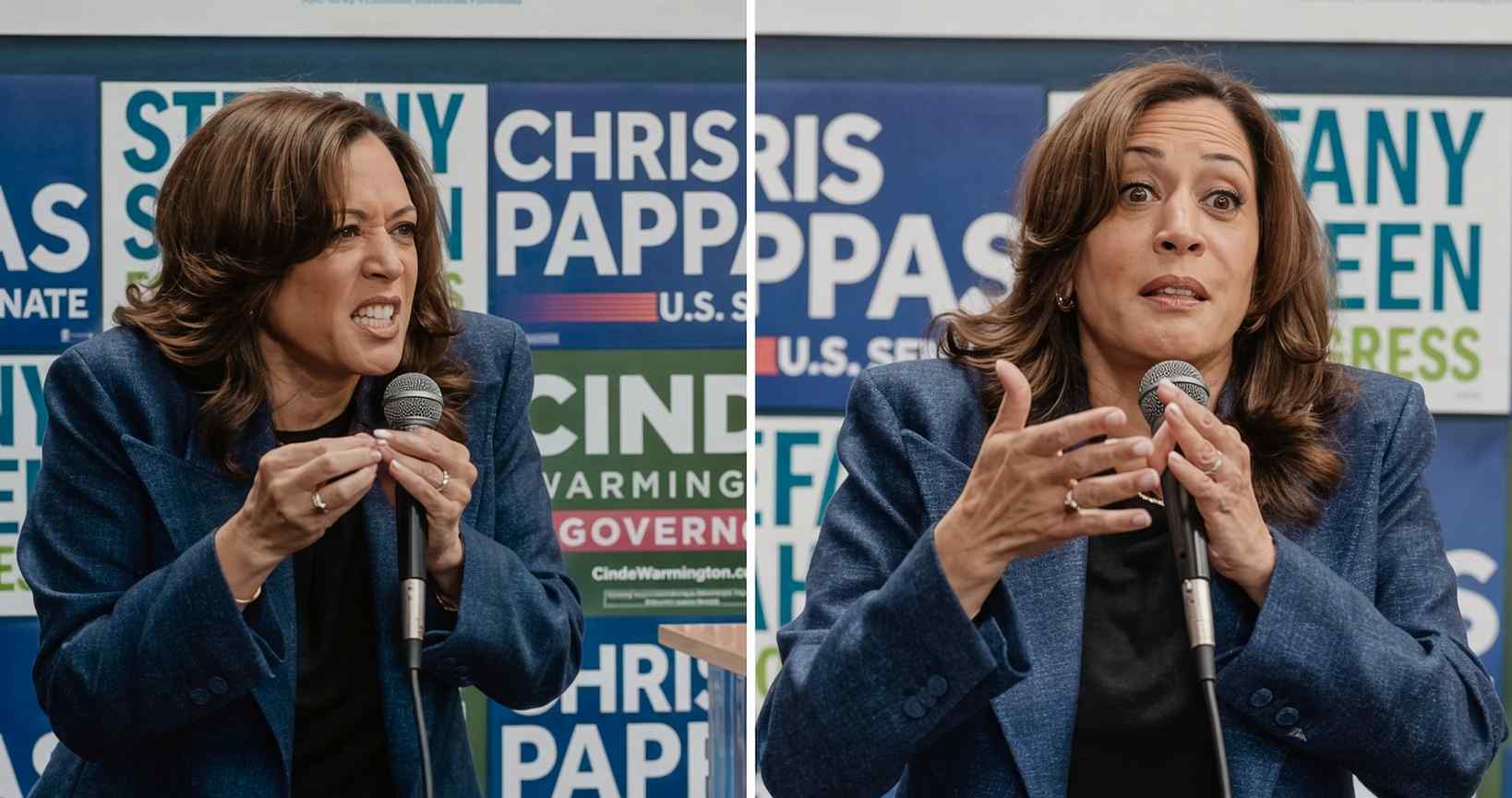
The former vice president appeared at a Democratic phone banking event in Portsmouth ahead of November’s midterm elections.
Harris described conversations inside Washington meeting rooms without identifying specific legislation, participants, or decisions in the excerpt.
Her 76-word salad was confusing, reviving longstanding Republican criticism of her speaking style.
“I was a United States Senator, so I know what happens in those rooms. In those rooms there are conversations that happen, where it’s important for certain people to stand up and speak, to help at least encourage a certain conscience about what we should care about, in terms of the work we do in the halls of Washington D.C., and with some clarity about how it will actually play out in the streets of America,” Harris rambled.
It’s unclear to many what she was even trying to say.
Harris served as California’s United States senator from 2017 until becoming vice president in January 2021.
Her Senate experience remains a central credential as she campaigns for Democratic candidates in competitive states.
Joining Harris in Portsmouth were Senate nominee Chris Pappas, gubernatorial candidate Cinde Warmington, and congressional candidate Stefany Shaheen.
Pappas faces former Republican Senator John Sununu, who previously represented New Hampshire between 2003 and 2009.
Sununu’s return gives Republicans an experienced contender in a race drawing national attention.
Republicans can contrast Sununu’s Senate experience with Harris’s latest remarks while focusing on their own policy priorities.
The New Hampshire appearance also featured Harris urging volunteers to organize voters during the campaign’s final days.
Local television coverage showed Harris discussing frustration among Democrats and encouraging supporters to translate emotions into votes.
Her message criticized President Donald Trump’s administration and called for renewed Democratic political participation.
Republicans, meanwhile, are emphasizing their economic agenda, border enforcement, and national security record before Election Day.
Those competing messages matter more to voters than any isolated awkward sentence from a campaign appearance.
Harris also participated in a Manchester discussion about reproductive healthcare and abortion rights during her visit.
The issue remains prominent for Democrats, while Republicans emphasize their own positions on federalism and parental concerns.
Harris’s return has renewed speculation about whether she will seek the Democratic presidential nomination in 2028.
She has not announced another campaign and says her immediate priority is helping Democrats in November.
Her itinerary includes appearances across Nevada, Mississippi, New Hampshire, Wisconsin, and Georgia during the final campaign stretch.
In Nevada, Harris rallied union members alongside Democratic gubernatorial candidate Aaron Ford.
In Mississippi, she supported Scott Colom, who is challenging Republican Senator Cindy Hyde-Smith.
Hyde-Smith is defending a seat in a state that has favored Republican presidential nominees for decades.
Harris’s Wisconsin stop features Democratic gubernatorial nominee David Crowley, another candidate seeking her national visibility.
She plans to finish with Georgia events supporting Democratic Senator Jon Ossoff and other party activities.
Georgia remains politically competitive, making turnout operations important for both parties heading into November.
The tour also visits states holding early contests in the Democrats’ 2028 presidential nominating calendar.
That itinerary naturally invites questions about Harris’s ambitions, even without a formal presidential announcement.
Her political future remains complicated by her loss to Trump in the 2024 presidential election.
Harris became the Democratic nominee after President Joe Biden withdrew from the race that summer.
Trump subsequently won the presidency, returning Republicans to the White House after four years in opposition.
Harris’s earlier presidential campaign ended before voting began in the 2020 Democratic primaries.
A third presidential attempt would invite renewed scrutiny of her record, campaign decisions, and political messaging.