Trump Blames Obama as U.S. Launches ‘Defensive Strikes’ Against Iran
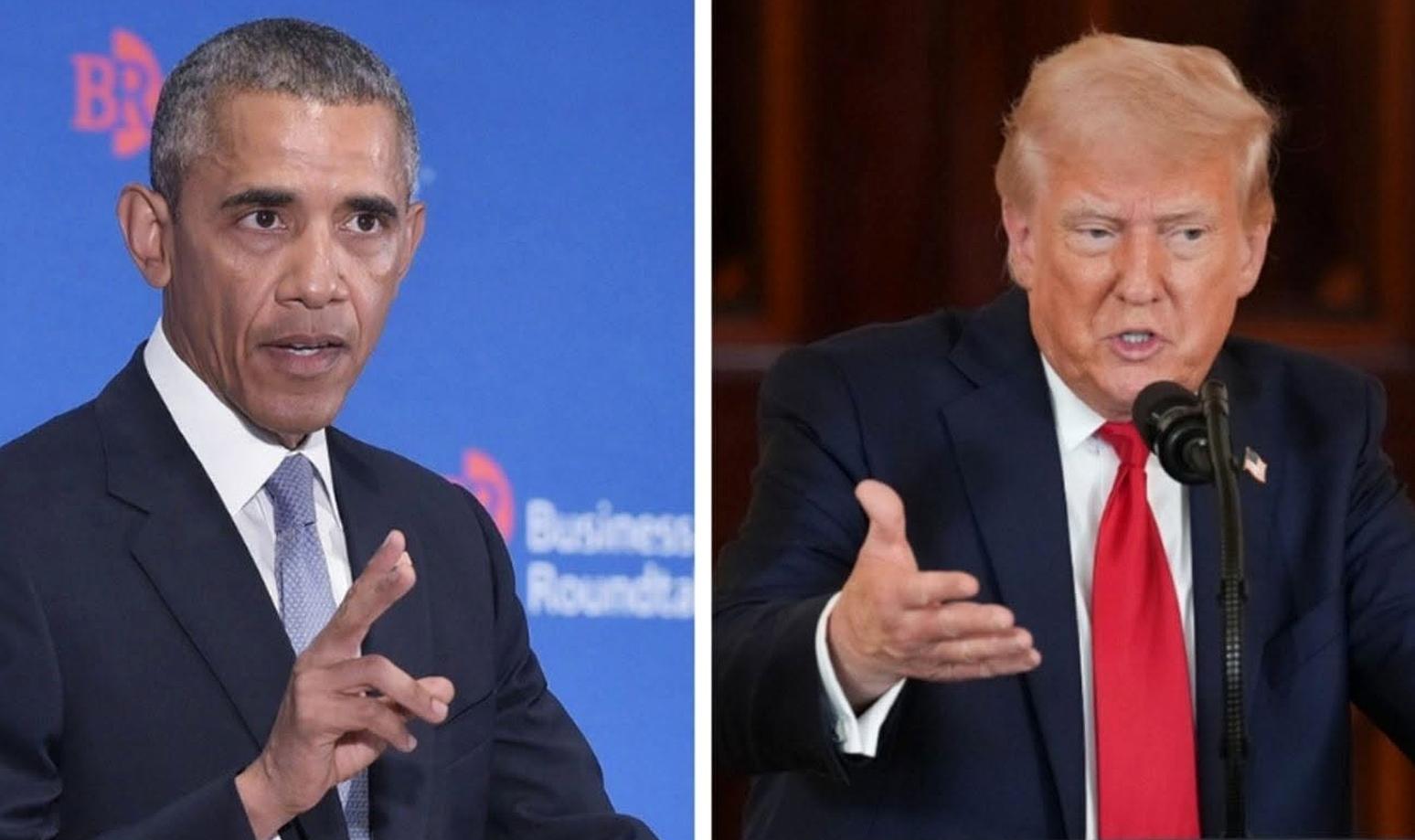
Trump contrasted his own foreign policy posture with those of Obama and former President Joe Biden, claiming Iran only responds to strength rather than negotiation.
Advertisement According to U.S. Central Command, American forces targeted missile launch sites and Iranian boats that were attempting to place naval mines in the region.
“U.S. forces conducted self-defense strikes in southern Iran today to protect our troops from threats posed by Iranian forces,” CENTCOM spokesperson Capt. Tim Hawkins said in a statement. Advertisement Officials said the strikes focused on Iranian Revolutionary Guard Corps assets, including two vessels reportedly laying mines near the Strait of Hormuz and a surface-to-air missile site in Bandar Abbas that had targeted U.S. warplanes.
The comments came the same day the U.S. military confirmed it carried out defensive strikes in southern Iran after Iranian forces allegedly threatened American personnel and strategic shipping lanes near the Strait of Hormuz
“These were defensive strikes,” one senior U.S. official told reporters, emphasizing that the actions were not intended to end the current ceasefire framework but rather to protect American troops and maritime operations.
Trump’s remarks also revived debate over one of the Obama administration’s most controversial foreign policy decisions: the 2016 transfer of $1.7 billion in cash and foreign currency to Iran following the implementation of the Iran nuclear agreement.
The Obama administration acknowledged at the time that the money was delivered in pallets of foreign cash because sanctions had effectively blocked Iran from accessing the international financial system.
Explosions were reported Monday in Bandar Abbas, Sirik, and Jask, all located near the strategically vital Strait of Hormuz, through which a significant percentage of the world’s oil supply passes each day
Additional payments totaling $1.3 billion followed in subsequent weeks.
Obama officials maintained the payment stemmed from a decades-old legal settlement involving Iranian funds frozen after the 1979 Islamic Revolution.
However, critics argued the timing effectively amounted to ransom payments that incentivized hostage-taking by the Iranian regime.
🔥 BREAKING: President Trump just dropped absolute TRUTH NUKES on Hussein Obama
— Eric Daugherty (@EricLDaugh) May 25, 2026
"Don't forget the one who funded Iran and caused this war to happen. OBAMA!"
OBAMA: "Let's negotiate" Iran: "I will blow sht up"
BIDEN: "Let's negotiate" Iran: "I will blow sht up"
TRUMP: "I WILL… pic.twitter.com/RXrs4vu9DW
The first installment, totaling $400 million, was transferred to Tehran on Jan. 17, 2016, the same day Iran released four American prisoners
Then-Sen. Marco Rubio and Rep. Ed Royce introduced legislation seeking to prohibit future administrations from making similar payments.
Trump and his allies have repeatedly argued that Obama’s Iran policies — including the nuclear deal and sanctions relief — helped finance Tehran’s regional military expansion, proxy groups, and missile development programs.
The administration now says its current strategy of military deterrence and economic pressure has forced Iran back into a more defensive posture.
Congressional Republicans blasted the move at the time, saying the administration empowered a state sponsor of terrorism while publicly insisting the payments were unrelated to the prisoner release
The renewed military activity also comes amid continued instability across the Middle East, where Iranian-backed militias and regional proxy groups remain active despite ongoing ceasefire discussions.
While administration officials stressed Monday’s strikes were limited and defensive in nature, the confrontation highlights how quickly tensions with Iran can escalate around the Strait of Hormuz, one of the world’s most sensitive geopolitical flashpoints.
This article may contain commentary which reflects the author’s opinion.