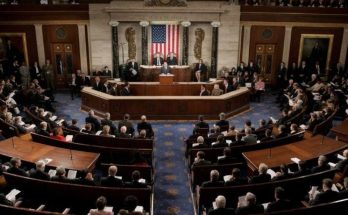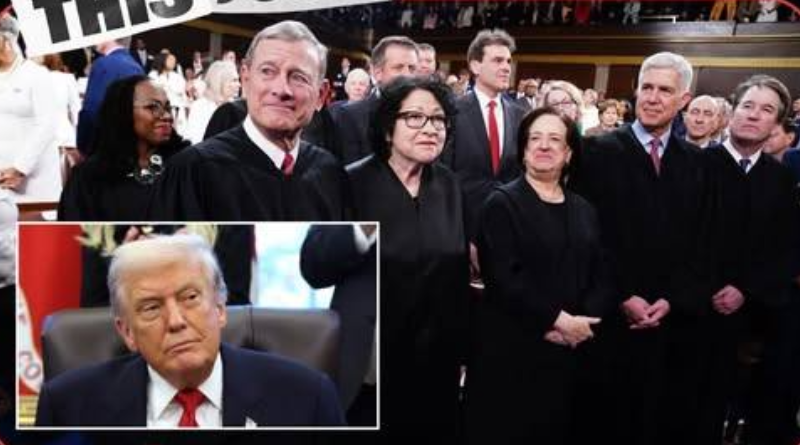
President Donald Trump’s odds of surviving a Supreme Court showdown over his sweeping tariff regime appeared to quietly
improve Friday, not because the justices ruled in his favor, but because they did not rule at all.
The Supreme Court again declined to issue a decision in the closely watched case challenging Trump’s use of
emergency powers to impose tariffs, leaving investors and importers in limbo after bracing for an expected opinion, The
New York Post reported.
It marked the second time in less than a week the court passed on releasing a ruling, fueling
speculation among legal observers that the justices are divided and that the delay could ultimately benefit the White
House.
“We agree that a long wait for the tariff decision is probably a better sign for the Trump
administration than it is for importers, but it is no guarantee of the outcome,” trade attorney Kelsey Christensen
told MarketWatch.
Christensen said the case is still moving quickly by Supreme Court standards, noting that oral arguments were held
just two months ago.
“November to January is lightning speed for the court to hear and publish a major opinion,” she said,
adding that the justices may be fine-tuning a majority opinion along with dissents or concurrences.
Terence Lau, dean of Syracuse University’s law school and a former trade attorney for Ford Motor Co., said
the delay could reflect internal debate over how far the court should go if it rules against Trump.
“The longer wait suggests the justices are debating the scope of the remedy,” Lau told MarketWatch.
One potential outcome, he said, is a middle-ground ruling that invalidates the tariffs while limiting refunds to future
collections, sparing the Treasury from having to repay duties already collected.
“The longer the tariffs remain in place, the more catastrophic a retroactive refund becomes for the U.S. Treasury,”
Lau warned.
Market speculation has moved in real time. On the prediction market Kalshi, the odds of a Trump victory
rose to 34 percent Friday, up from roughly 22 percent earlier in the week.
Polymarket showed similar movement, with Trump’s chances climbing to 33 percent after dipping near 21 percent days earlier.
The case carries major economic stakes, with billions of dollars in tariff revenue and potential refunds hanging in
the balance.
Lower courts previously ruled that Trump exceeded his authority by invoking the International Emergency Economic Powers Act of
1977 to justify country-specific tariffs, arguing the statute does not explicitly authorize tariffs and has never before been
used for that purpose.
Trump has defended the legality of the tariffs and warned that striking them down would inflict serious damage
on the U.S. economy.
“It would be a complete mess, and almost impossible for our country to pay,” Trump wrote in a
recent social-media post, warning about massive refunds if the tariffs are invalidated.
Administration officials have indicated they are prepared to keep tariffs in place even if the Supreme Court rules
against the current framework.
Those fallback options include invoking Section 232 of the Trade Expansion Act on national security grounds, as well
as Sections 301, 122, and 338 of the Trade Act.
National Economic Council Director Kevin Hassett said Friday that the administration has a Plan B if the tariffs
are struck down, Newsmax reported.
“We can put a 10 percent tariff on right away to make up most of the room,” Hassett
said on Fox News.
He said longer-term tools under Sections 301 and 232 could then be used to backfill existing trade agreements.
“There are a lot of other legal authorities that can reproduce the deals that we’ve made with other
countries and can do so basically immediately,” Hassett said.
Trump has used tariffs as leverage to rebalance trade and pressure both allies and adversaries, but critics argue
the tariffs amount to a tax that must be approved by Congress.