Immigration Judges Speech Policy Lawsuit Moves Forward
The immigration judges speech policy lawsuit returned to a federal trial court after a Supreme Court decision. The justices agreed that more work must be done before the dispute can be resolved.
The Supreme Court refused the administration’s request to block a ruling from the 4th U.S. Circuit Court of Appeals. Instead, the case will return to a lower court to address legal and procedural issues.
The appellate court did not overturn the earlier decision. However, it directed the trial court to gather additional information related to the dispute.
Dispute Over Immigration Judges Speech Policy
The immigration judges speech policy lawsuit centers on rules limiting how immigration judges can speak publicly. The policy bars judges from discussing immigration issues in their personal capacity.
It also restricts judges from speaking about the federal agency that employs them. According to the National Association of Immigration Judges, this policy violates the First Amendment.
The organization filed the lawsuit in federal court in Alexandria, Virginia. The group argues that the policy unconstitutionally limits free speech.
Initial Dismissal and Appeal
U.S. District Judge Leonie Brinkema initially dismissed the case. She ruled that the Civil Service Reform Act required the claims to be handled through the federal government’s administrative review system.
This system typically handles employment disputes involving federal employees. As a result, Brinkema said the case should not proceed in district court.
However, the National Association of Immigration Judges appealed the dismissal. The 4th Circuit later sent the case back to Brinkema for further review.
Appeals Court Raises Concerns About Administrative Independence
The appeals court cited recent actions by President Donald Trump when reconsidering the case. These actions raised questions about the independence of the administrative review process.
Specifically, the court pointed to Trump’s dismissal of the chair of the Merit Systems Protection Board. The appeals court also noted the removal of the Special Counsel.
Both positions play key roles in reviewing federal employment disputes. Therefore, the appeals panel questioned whether Congress intended administrative review to remain the only option.
Court Orders Further Fact-Finding
The appeals court instructed the trial court to collect more information. The judges requested findings about “the continued vitality of the adjudicatory scheme.”
Meanwhile, the administration asked the Supreme Court to block the appeals ruling. Solicitor General D. John Sauer filed the request on December 5.
Sauer argued that courts should not reinterpret laws based on changing political circumstances. He also warned the ruling could create uncertainty in federal administrative systems.
Supreme Court Declines to Block the Decision
Chief Justice John Roberts initially paused the case while the full court considered the request. Roberts oversees emergency matters for the 4th Circuit.
However, the Supreme Court ultimately refused to block the lower court ruling. As a result, the immigration judges speech policy lawsuit will proceed in district court.
The justices also said the administration had not shown it would suffer “irreparable harm.” Therefore, the court allowed the appeals ruling to stand.
Possibility of Future Supreme Court Review
The Supreme Court left open the possibility of reviewing the case later. The justices said the government could seek relief again under certain circumstances.
Specifically, the administration may return if the trial court begins discovery before the Supreme Court decides whether to hear the case. This option keeps the legal dispute active.
Meanwhile, the judges’ association argued that limited fact-finding would not harm the government. The group also said the administrative system’s independence must be examined.
Related Supreme Court Debate on Campaign Finance
The Supreme Court also heard arguments this month in a separate campaign finance dispute. The case questions whether limits on coordinated political spending violate the First Amendment.
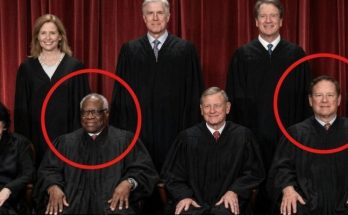
During oral arguments, Justice Clarence Thomas questioned attorney Marc Elias about the law. Elias argued that Congress has authority to set limits on campaign spending.
However, the challengers claim coordinated political spending is protected speech. Current law already places limits on individual contributions to candidates.
The Court previously allowed some limits to prevent corruption while protecting political speech. The outcome of the new case could affect campaign finance rules before the midterm elections.