New York Congressional Map Supreme Court Ruling Explained
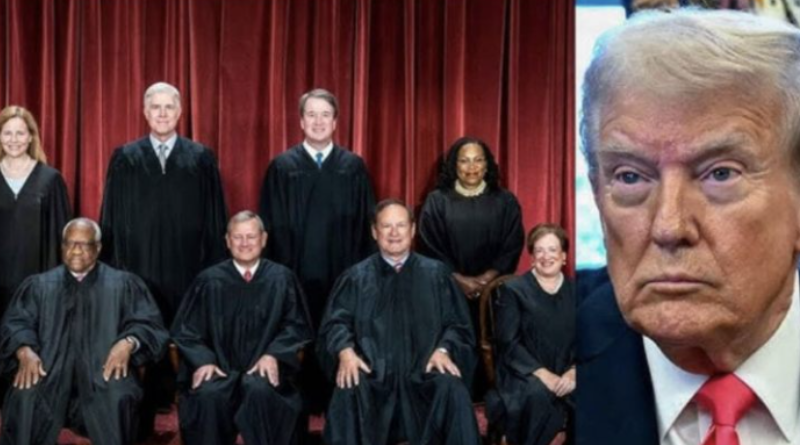
The New York congressional map Supreme Court ruling came through an emergency order issued last week. The order temporarily blocks a lower court decision that required the map to be redrawn.
The lower court had ruled that the map violated the Constitution. Specifically, the court said it diluted the voting power of Black and Latino residents.
However, the Supreme Court’s order allows the existing map to remain while appeals continue. Therefore, the current districts will likely be used in the upcoming midterm elections.
Emergency Order Keeps Current Map in Place
The Court’s order was unsigned and included no vote count. This approach is common for decisions issued on the Court’s emergency docket.
Although brief, the ruling has political implications. Analysts say the New York congressional map Supreme Court ruling could benefit Republicans.
The decision may help Republicans hold control of the closely divided House of Representatives. As a result, the outcome has drawn significant political attention.
Nicole Malliotakis Challenge Led to Supreme Court Action
Representative Nicole Malliotakis filed the emergency application with the Supreme Court. She represents a district covering Staten Island and parts of southern Brooklyn.
A state judge had previously ordered her district to be redrawn. The dispute centers on New York’s 11th Congressional District.
This district is the only Republican-held congressional district in New York City. Therefore, its boundaries have become central to the legal battle.
Connection to Major Voting Rights Case
The New York congressional map Supreme Court ruling arrives while the Court considers another major redistricting case. The justices are expected to rule in Louisiana v. Callais.
That case challenges a congressional map adopted by Louisiana lawmakers. The map created a second majority-Black district after earlier court challenges.
The dispute focuses on Section 2 of the Voting Rights Act of 1965. This provision allows individuals and organizations to challenge election laws they believe weaken minority voting power.
Supreme Court Examines Race and Redistricting
The Supreme Court previously ordered Louisiana v. Callais to be reargued. This step suggested the justices may reconsider how race can be used in redistricting.
During oral arguments, the Court examined potential conflicts with the Equal Protection Clause. That clause is part of the 14th Amendment.
Section 2 has been the main legal tool used in redistricting challenges. This became especially important after the Court’s 2013 ruling in Shelby County v. Holder.
Impact of Shelby County v. Holder
The Shelby County v. Holder decision removed the Voting Rights Act’s preclearance requirement. Previously, some states needed federal approval before changing election laws.
Since then, Section 2 lawsuits have played a larger role in election disputes. These legal challenges often focus on whether district maps dilute minority voting power.
Meanwhile, the upcoming Louisiana decision could influence future redistricting cases. Several states may consider new maps before the 2026 midterm elections.
States Watching the Supreme Court Decision
Analysts say states such as Georgia, South Carolina, Tennessee, Missouri, and Florida could face redistricting debates. These states currently have unified party control in government.
Chief Justice John Roberts addressed legal standards during arguments. He previously wrote the 2023 decision in Allen v. Milligan.
That ruling required Alabama to create a second majority-Black district. Roberts examined whether the Louisiana proposal fits the Court’s established legal framework.
Debate Over Section 2 Protections
Justice Brett Kavanaugh raised additional questions during arguments. He suggested that remedies under Section 2 might include a possible “sunset” clause.
Such a clause could limit race-based policies to temporary solutions. Voting rights organizations have expressed concerns about limiting Section 2 protections.
Groups including Fair Fight Action and the Black Voters Matter Fund warn of political consequences. They argue changes could allow Republican-led legislatures to redraw up to 19 districts.
Research has also identified 27 congressional seats that could potentially be redrawn nationwide.
States Consider Their Own Voting Rights Laws
While the nation awaits the Supreme Court decision, some states are considering new legislation. These proposals would create state-level voting rights protections.
In Mississippi, Democrat Zakiya Summers introduced one such bill. Additionally, state senator Johnny DuPree proposed a similar measure.
Both proposals aim to establish a state version of the Voting Rights Act of 1965. Supporters say these laws could provide protections regardless of future federal rulings.